AI in the Warehouse: Aligning Workforce Readiness with Modern Operations
Insights on storage - February 27th 2026
Building a Workforce for an Automated Environment
In high-density, automation-enabled warehouses, job roles are evolving.
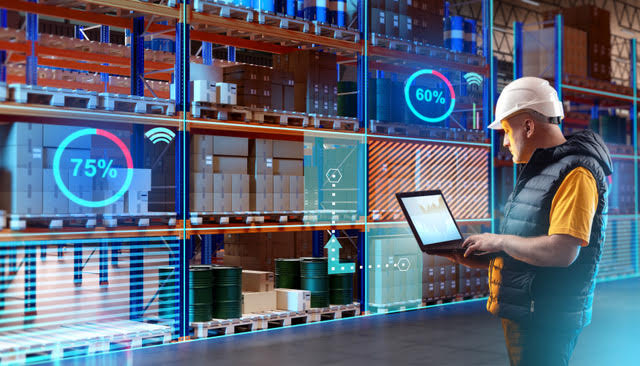
Operators engage with mobile storage systems rather than static racks. Supervisors monitor performance metrics instead of relying solely on manual oversight. Technicians increasingly manage system behavior rather than physical inventory movement.
Automation does not eliminate roles — it transforms how they create value.
To remain competitive, organizations must prepare teams to:
- Operate automated mobile storage systems safely and efficiently
- Interpret system alerts and performance metrics
- Adjust workflows based on real-time inventory intelligence
- Collaborate across operations and IT functions
The modern warehouse professional combines operational experience with digital awareness.
The New Skill Landscape in AI-Enabled Warehousing
AI-driven logistics does not replace human expertise — it enhances it. But it requires new competencies that bridge physical operations and digital systems.
Key skill areas include:
- AI literacy: Understanding how inventory algorithms influence storage density, retrieval timing, and aisle access.
- Systems oversight: Monitoring automated mobile platforms, ensuring uptime, and responding to performance alerts.
- Data-informed decision making: Using operational data to optimize slotting, reduce travel time, and improve throughput.
- Safety in dynamic environments: Applying updated protocols when working alongside automation and robotics.
When workforce development reflects these realities, automation becomes a performance multiplier rather than a disruption.
How Montel Enables Workforce-Ready Automated Warehouses
In automated warehouses, infrastructure becomes the bridge between AI capability and human performance.
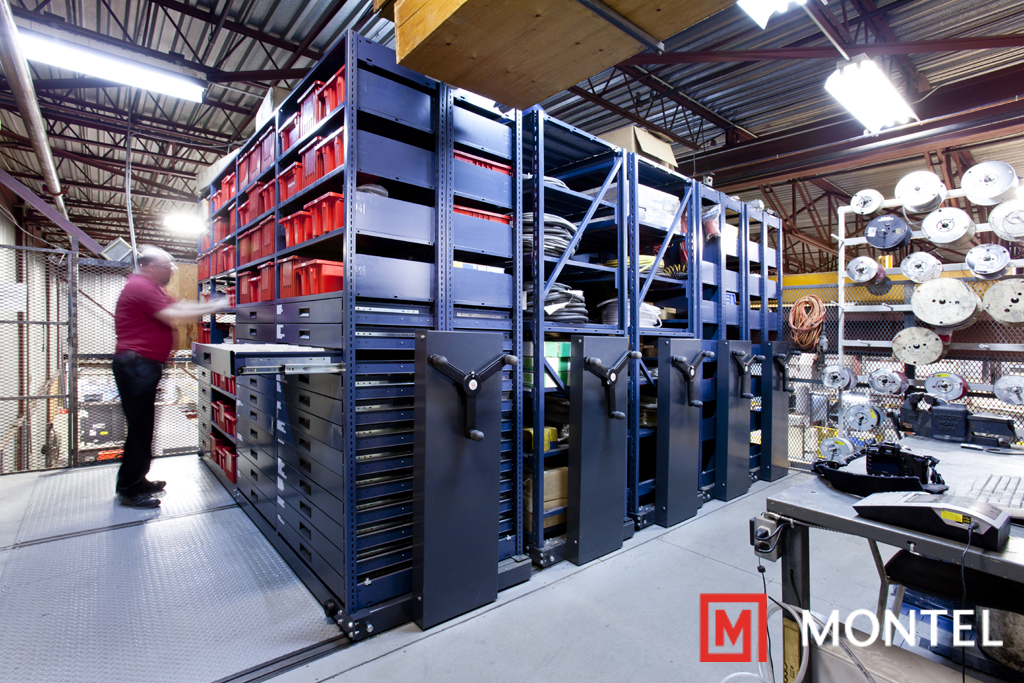
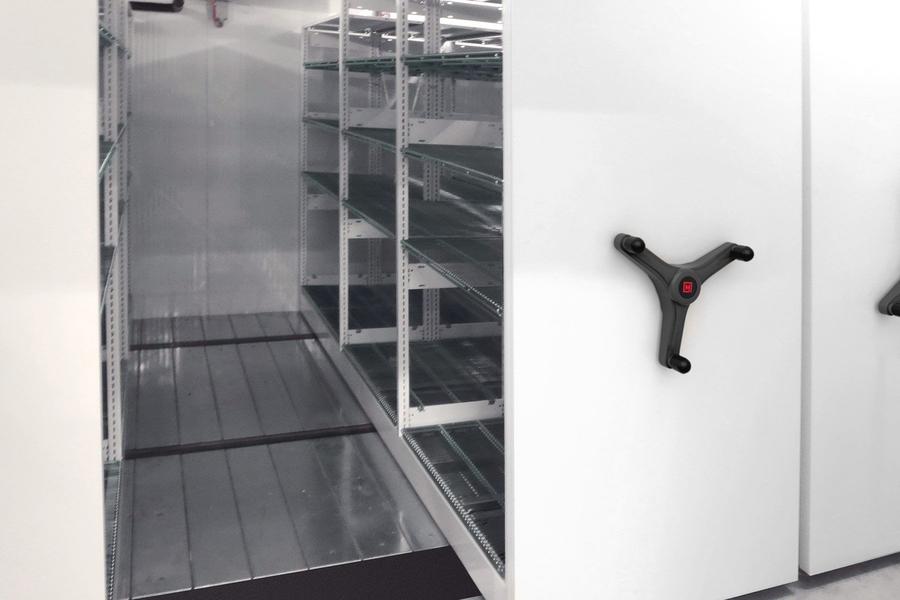
High-density mobile storage systems reshape traffic flow, aisle access, and inventory control. Operators must understand controlled access systems, system-triggered movement, and integrated safety mechanisms.
Montel enables workforce-ready automated warehouses through infrastructure engineered for seamless integration, intuitive operation, and safe performance in compact environments. Our high-density mobile systems are designed to support evolving workflows while minimizing operational friction.
As automation advances, some roles expand while others are redefined — requiring both upskilling and reskilling strategies to sustain performance.
Upskilling vs. Reskilling: Two Paths to Sustainable Modernization
Successful automation strategies distinguish between strengthening existing roles and preparing for entirely new ones.
Upskilling enhances current responsibilities:
- Training operators to manage automated mobile systems
- Teaching supervisors to interpret system analytics
- Increasing digital fluency within operational teams
Reskilling prepares employees for emerging functions:
- Automation coordinators
- Systems integration specialists
- Inventory data analysts
Organizations that invest in both approaches retain critical operational expertise while expanding technical capability — accelerating adoption and improving return on automation investments.
At Montel, infrastructure upgrades are approached with workforce impact in mind. As operators implement high-density automated systems, we work alongside them to ensure technology enhancements are aligned with evolving skill requirements and workflow realities.
This integrated approach supports smoother system adoption, reduces implementation friction, and enables AI-driven modernization to advance without compromising operational stability.
Global Markets, Shared Automation Pressures
Automation adoption varies by region, but the workforce and infrastructure challenge is universal.
Canada and the United States are accelerating automation to address labor shortages and throughput demands, requiring teams to adapt quickly to high-density, system-driven environments.
Europe faces space constraints and sustainability pressures, driving compact storage solutions that demand greater technical fluency on the floor.
The Middle East is rapidly developing smart logistics hubs, where large-scale automation places system oversight and workforce readiness at the center of operations.
Across markets, the conclusion is consistent: infrastructure modernization and workforce development must advance together to unlock measurable gains in efficiency, safety, and space utilization.
For further insight into how optimized storage impacts operational costs globally, see 3 Most Common Hidden Costs of Wasted Warehouse Space
Smart Warehouses Require Aligned Modernization
AI does not transform warehouses on its own. It reshapes how space is used, how systems communicate, and how people operate within increasingly optimized environments.
Organizations that modernize infrastructure without preparing their workforce create operational friction. Those that align storage systems, automation strategies, and workforce development unlock measurable gains in density, efficiency, and safety.
Sustainable automation is not achieved through technology alone — it is achieved when infrastructure and workforce readiness advance together.
Montel supports this evolution by engineering high-density storage solutions that enable automation while strengthening the performance of the teams who operate it.
Ready to modernize your warehouse?
Q&A Summary
What is workforce upskilling in an AI-driven warehouse? Upskilling strengthens existing warehouse roles with the technical skills needed to operate automated systems, interpret performance data, and work confidently in high-density, digitally integrated environments.
How does reskilling differ from upskilling? Reskilling prepares employees for entirely new roles created by automation, such as system oversight or automation coordination. Upskilling enhances current responsibilities; reskilling enables role transition.
Why must infrastructure and workforce modernization align? Automation changes how space is accessed and how teams operate. When infrastructure upgrades and workforce development progress together, warehouses experience smoother system adoption, reduced disruption, and stronger performance gains.
Why is AI literacy important in warehouse operations? AI literacy helps teams understand how algorithms influence storage density, retrieval timing, workflow efficiency, and safety — ensuring automation improves throughput rather than creating operational friction.
How do high-density storage systems support automation? High-density mobile storage systems optimize space utilization and integrate with automation platforms, enabling greater storage capacity, improved efficiency, and controlled access within compact warehouse environments.
How does Montel help warehouses adopt automation successfully? Montel engineers high-density mobile storage systems designed for seamless automation integration, enabling warehouses to increase storage density, improve efficiency, and support workforce readiness during modernization.
Which regions are leading warehouse automation? North America, Europe, and the Middle East are accelerating automation to address labor shortages, space constraints, and logistics growth — reinforcing the need for aligned infrastructure and workforce strategies.