The Efficiency Multiplier: Why Mobile Racks Are Key to Lowering Your Vertical Farm’s Power Bill
Insights on vertical farming - April 28th 2026
Key Takeaways
- Spatial ROI: Transitioning from static to mobile racking can reclaim up to 50% of wasted aisle space, converting it into productive canopy.
- HVAC Efficiency: Smaller footprints significantly reduce the cubic volume of air requiring dehumidification and temperature control.
- Lighting Precision: Concentrating plants allows for a more uniform light environment, reducing photon "spill" onto floors and walls.
- Long-Term Efficiency: Lower energy demand and optimized layouts create compounding savings and support scalable growth.
Redefining the Footprint: Eliminating the Cost of Empty Aisles
In many fixed-aisle grow rooms, up to 40–50% of the floor space is reserved for access—not production. From a thermal and electrical standpoint, those aisles are a financial drain. In practice, you’re paying to light and condition space that generates no yield.
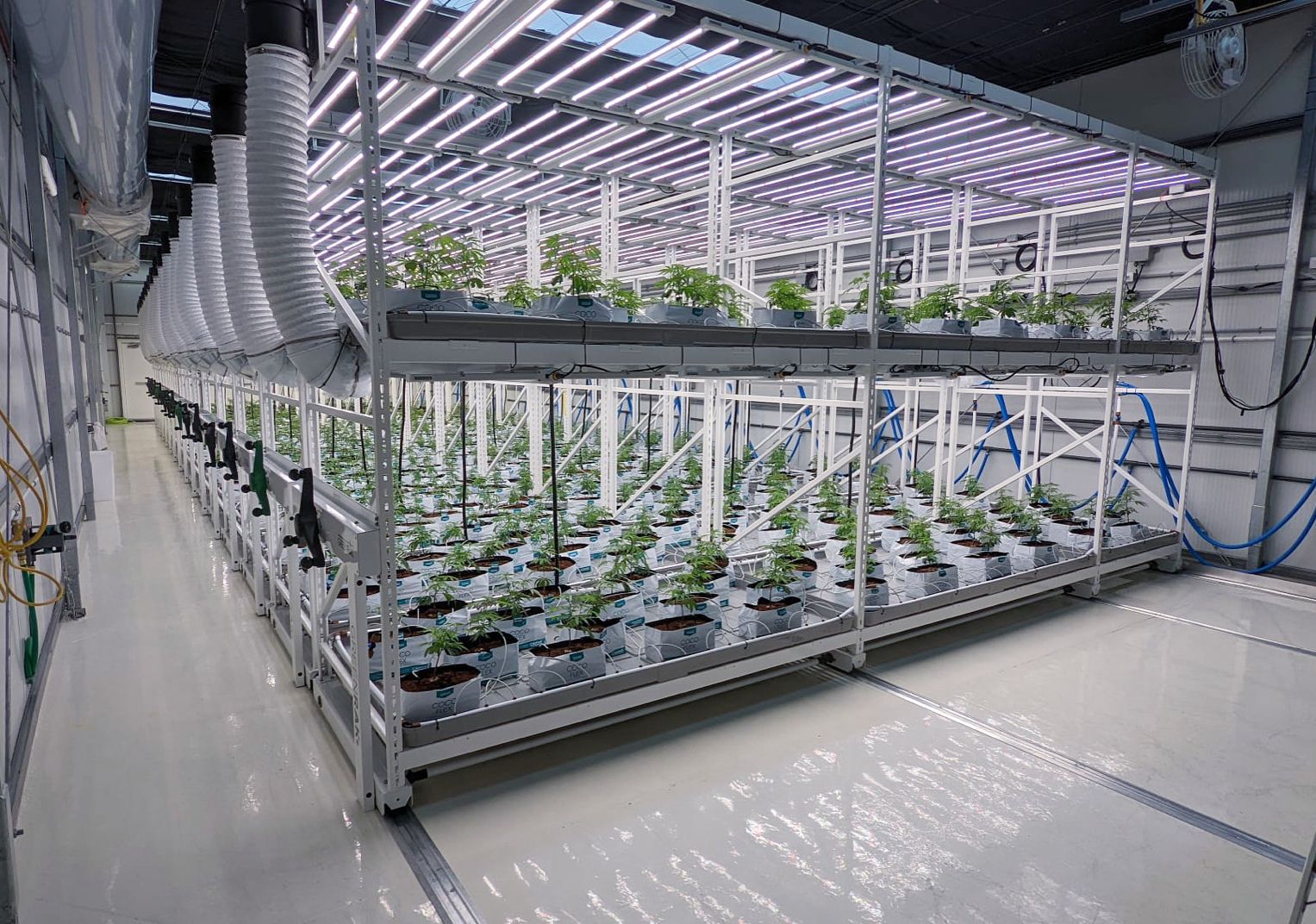
By integrating high-density mobile grow racks, you convert those static aisles into productive cultivation space. A single "floating" aisle is created only when and where it is needed. This shift allows you to consolidate your plant canopy, ensuring that every watt of energy pulled from the grid is directed toward photosynthesis rather than illuminating concrete floors. This optimized lighting layout ensures that your PAR (Photosynthetic Active Radiation) is concentrated exactly where it generates ROI: on the leaves.
How Mobile Systems Shrink Your HVAC Load
It is a common misconception that vertical farming is only about height. In reality, it is about cubic volume. Every cubic foot of air in a facility—whether in New York, Ontario, or California—must be scrubbed, dehumidified, and temperature-controlled.
When you implement mobile systems, you can fit the same number of plants into a significantly smaller room. This reduction in total facility footprint directly lowers HVAC demand:
- Reduced Cubic Volume: A smaller footprint means less air to dehumidify and condition—especially critical in high-humidity environments where HVAC systems run continuously.
- Thermal Consistency: Denser plant canopies help maintain a more stable microclimate, preventing the "hot spots" found in sprawling, inefficient layouts.
- Optimized CAPEX: Lowering the heat gain from unnecessary lighting allows for smaller, more efficient HVAC units, saving money on both initial equipment and long-term maintenance.
Maximizing Photons with Integrated Lighting
Lighting accounts for a massive portion of vertical farm energy consumption. In a fixed-aisle setup, light spill is inevitable, meaning a portion of your lighting investment never reaches the canopy.
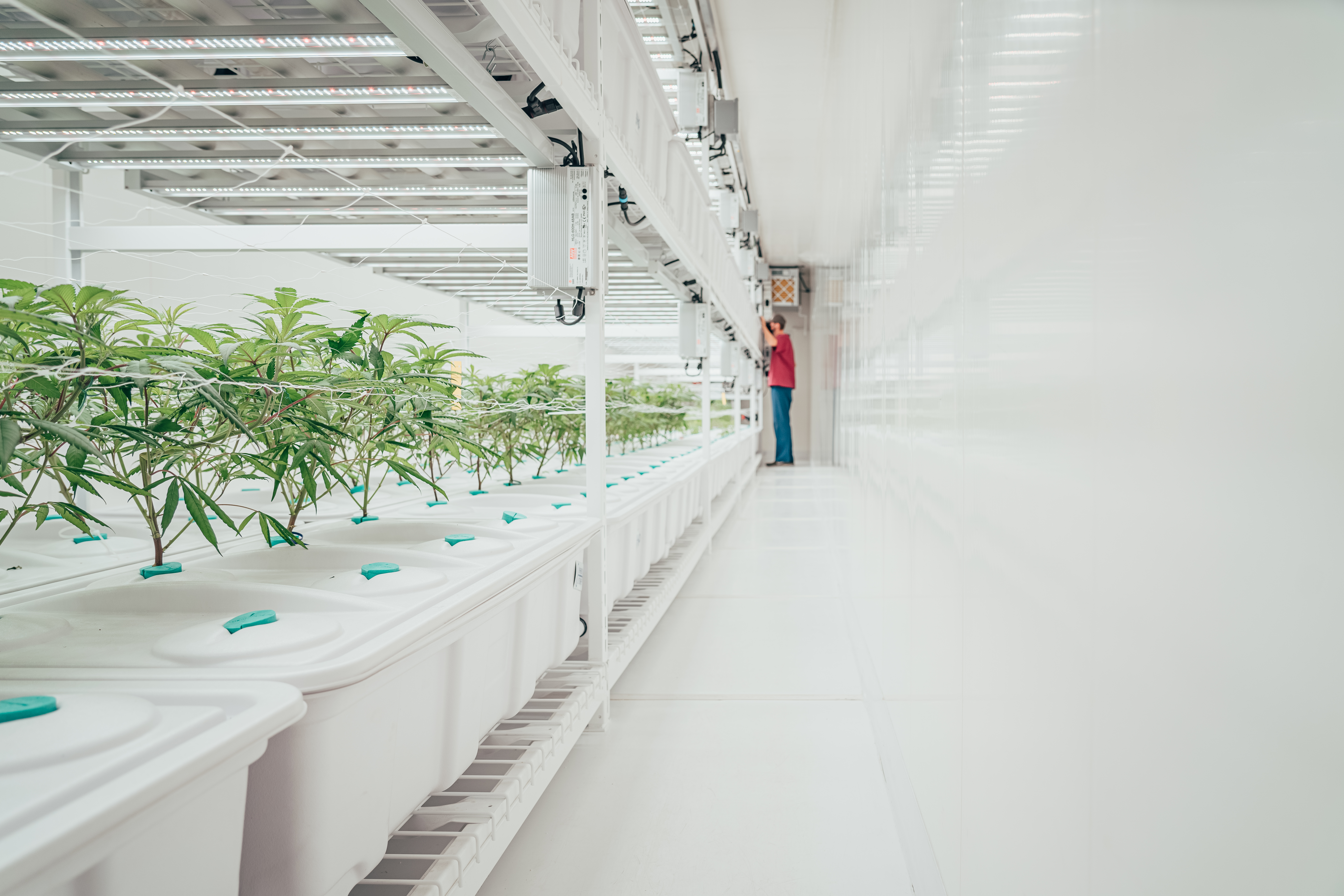
High-density mobile racking allows for a more integrated lighting approach. By bringing rows closer together, you create a more uniform light environment. Many growers find that mobile shelving energy savings are realized immediately through the reduction of "wasted light" and the ability to use shorter wiring runs, which minimizes voltage drop and simplifies the electrical infrastructure.
Designing for Efficiency at Scale
This shift in layout doesn’t just reduce energy—it changes how efficiently a facility operates at scale. Today, the challenge isn’t just growing—it’s doing it efficiently enough to stay profitable at scale. Montel’s mobile solutions are engineered to handle the heavy, damp loads unique to vertical farming while providing the fluid lateral movement necessary to eliminate waste.
Beyond the power bill, these systems improve labor efficiency. When your rows move, your workflow becomes more fluid. Whether you are scaling a leafy green operation or a medicinal cannabis facility, the goal remains the same: squeeze every bit of value out of your square footage.
Achieving Long-Term Scalability
The decision to go mobile is a hedge against rising energy prices. By designing a facility that prioritizes a reduced HVAC load and optimized lighting, you are future-proofing your business. The savings you capture today will compound over years of harvests, providing the capital needed to expand into new markets.
If your layout still relies on fixed aisles, there’s a good chance you’re over-conditioning your space. Whether you are building from the ground up or retrofitting an existing space, our team is ready to design a high-density solution tailored to your crops.
Rethinking how your grow area is organized can unlock immediate efficiency gains—without changing your core operations.
Q&A Summary for Vertical Farm Efficiency
Q: What drives the majority of energy consumption in vertical farms? A: Lighting and HVAC systems are the primary drivers—but how efficiently the grow space is laid out directly impacts both.
Q: How do mobile racks improve overall efficiency in a vertical farm? A: By eliminating fixed aisles, mobile racks increase plant density, reduce the volume of conditioned space, and ensure lighting is focused on the canopy—improving both energy efficiency and output per square foot.
Q: Can mobile shelving really reduce HVAC load? A: Yes. By increasing plant density, you can use a smaller building footprint. A smaller room has less air volume to cool and dehumidify, which significantly lowers the demand on your climate control systems.
Q: Are these efficiency gains relevant for smaller operations? A: Yes. While the scale differs, improving layout efficiency reduces both lighting waste and HVAC demand, making it a critical factor for farms of any size.