Why AI-Driven Vertical Farms Depend on Precision Infrastructure
Insights on vertical farming - March 16th 2026
Key Takeaways for AI-Driven Indoor Farms
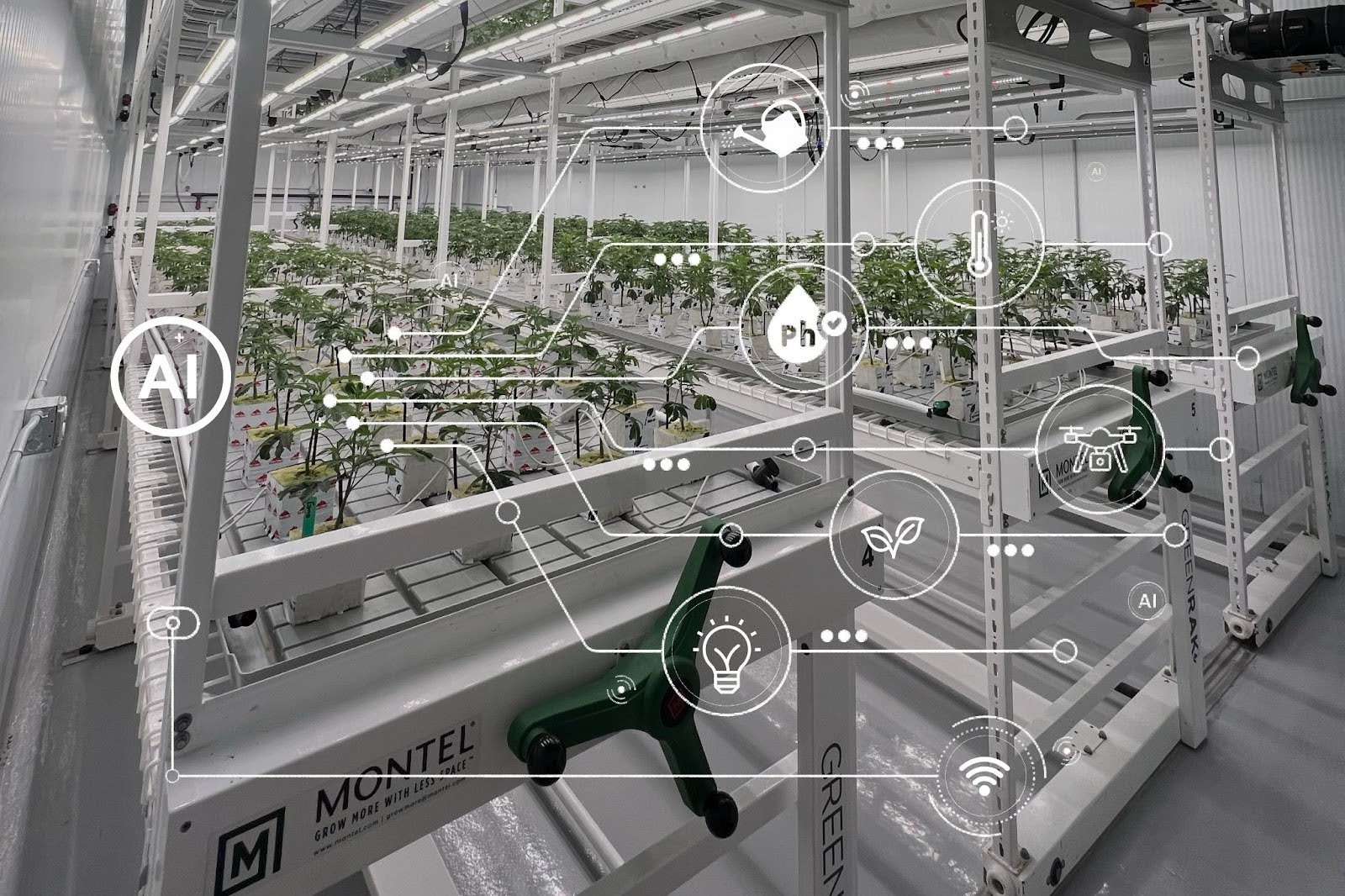
- AI-driven farms rely on precision infrastructure. Automation systems depend on stable racks, predictable movement, and consistent sensor positioning to operate accurately.
- Mechanical instability can compromise farm data. Small shifts in rack positioning or track performance can introduce “mechanical noise,” distorting environmental readings and automation decisions.
- Mobile grow rack systems improve canopy visibility. High-density mobile infrastructure allows sensors, robotics, and monitoring systems to access the full canopy when needed.
- Repeatability drives smart farming performance. Stable infrastructure allows growers to execute carefully calibrated climate and lighting “Smart Recipes” cycle after cycle.
- Modular infrastructure supports long-term innovation. Adaptable grow systems allow indoor farms to integrate new sensors, robotics, and lighting technologies as the industry evolves.
Digital intelligence alone does not make a farm efficient. In automated vertical farms, the performance of AI depends directly on the physical infrastructure that supports it. An AI-powered facility is only as reliable as the systems that carry its sensors, robotics, and environmental controls.
If racks wobble, tracks jam, or rows are inaccessible to automation, even the most sophisticated software quickly reaches its limits. To truly bridge the gap between high-tech and high-yield, the physical environment must be engineered for precision. That is where purpose-built infrastructure—such as Montel’s mobile grow systems—plays a critical role.
In AI-driven farms, infrastructure is no longer just structural. It becomes part of the data architecture that enables reliable automation and repeatable crop performance.
Why Advanced Software Demands High-Stability Hardware
Consider a robotic harvesting arm designed for millimetric precision. If that robot operates on a rack that shifts even slightly under the weight of irrigation water or vibrations from HVAC systems, its accuracy quickly degrades. Even small instability can translate into missed harvests—costly losses for a large-scale facility.
In a smart farm infrastructure, hardware stability isn't a luxury—it’s a data requirement.
Montel’s heavy-duty mobile grow systems are designed to handle massive loads (up to 8,000 lbs per bay) while maintaining the structural rigidity required for precision sensors and automation—ensuring sensors, cameras, and robotic systems remain precisely aligned. When infrastructure remains stable and predictable, AI systems can focus on optimizing plant performance instead of compensating for mechanical variability.
The Role of Mobile Grow Rack Integration
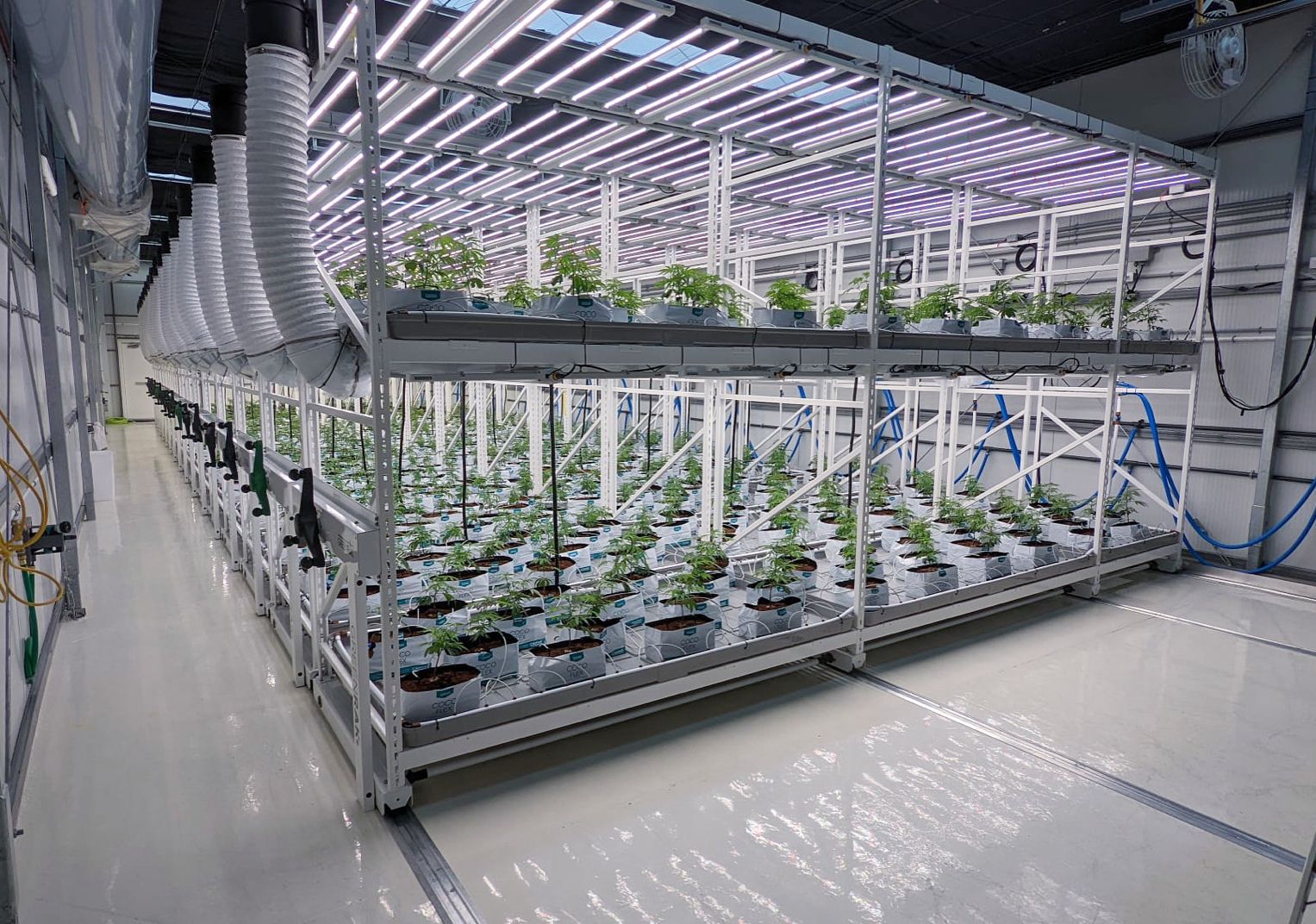
For an AI-powered vertical farm to function at peak efficiency, the physical layout must be as intelligent as the software controlling it. Static shelving systems can create operational blind spots. When sensors or cameras cannot reach the center of a rack, the system operates with incomplete data. Mobile grow rack systems eliminate these gaps by making the entire canopy accessible when needed.
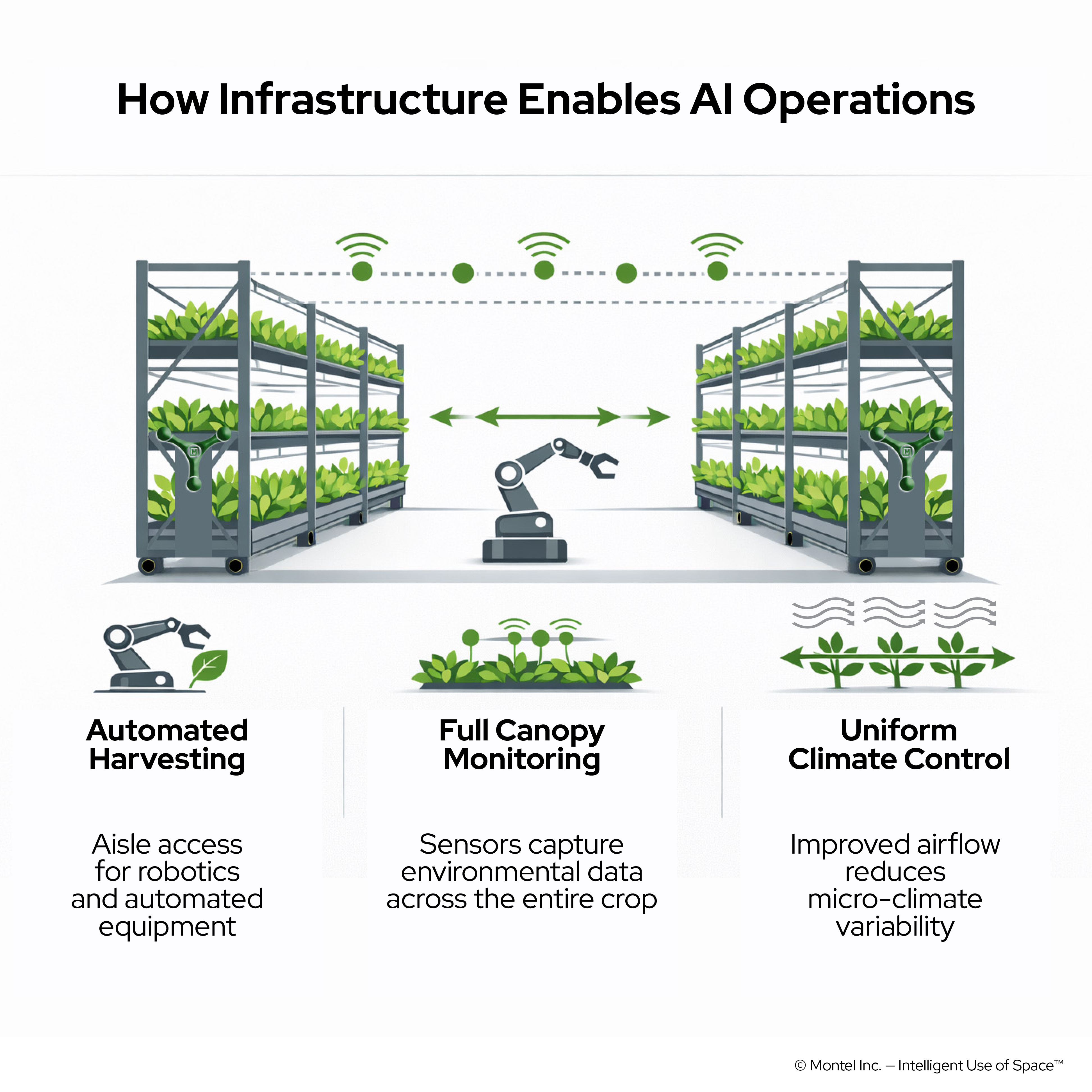
Mobile grow rack supports automation in several ways:
- Automated Harvesting: Providing aisle access for robotics and automated equipment.
- Sensor Saturation: Allowing monitoring systems to capture data across the full canopy.
- Uniform Climate Control: Improving airflow distribution and reducing micro-climate inconsistencies.
By ensuring crops can be monitored and accessed throughout the system, infrastructure helps AI operate with greater confidence and accuracy.
Precision Movement: The Secret to Reliable IoT Data
In a controlled environment, data is only as good as its source. When an IoT sensor triggers a climate adjustment, the AI assumes that sensor is operating in a stable and predictable location.
If racks fail to close flush or tracks degrade over time, sensor placement can shift. Even small changes can distort environmental maps. A two-inch variance in rack positioning can create what engineers call “ghost data”—situations where AI systems optimize conditions for areas that no longer align with real airflow or crop placement. This phenomenon introduces mechanical noise, where physical instability interferes with accurate data collection.
Montel’s precision-engineered tracks and drive systems are designed to minimize this mechanical noise. High-grade stainless steel wheels and machined rails ensure smooth, reliable movement—even under the demanding duty cycles of automated facilities in different environments around the world. When the physical system remains stable and predictable, the digital system can operate with confidence.
Growers rely on carefully calibrated “Smart Recipes” to reproduce crop performance cycle after cycle. Stable infrastructure ensures those recipes remain repeatable. Without that mechanical integrity, even the most advanced smart farm risks being built on a shifting foundation.
Modularity: Scaling Your AI with Your Business
Technology in indoor agriculture evolves rapidly. Lighting systems improve, robotics become more capable, and sensor platforms continue to advance. Infrastructure that cannot adapt quickly becomes a bottleneck.
Montel addresses this challenge by designing grow rack systems as modular platforms rather than fixed structures.
Montel's modular approach enables farms to:
- Integrate new technologies: Easily mount new LED arrays, environmental sensors, or specialized irrigation components without structural overhauls.
- Scale vertically or horizontally: Expand your footprint without tearing down existing infrastructure.
- Adapt to new robotics: Adjust aisle spacing or equipment configurations as robotics platforms evolve.
In a rapidly advancing industry, flexibility becomes a critical asset.
The Synergy of Metal and Machine Learning
Montel’s mobile grow rack systems provide that structural foundation. By supporting reliable automation and environmental control, they help operators reduce labor pressures, improve crop consistency, and maximize grams per watt across every production cycle.
In modern indoor agriculture, the most advanced software still depends on the strength and precision of the systems beneath it.
Don’t Let Infrastructure Limit Your Innovation
As indoor farms adopt more advanced automation and AI technologies, infrastructure plays a critical role in ensuring those systems perform as intended. Don’t let your hardware become the bottleneck to innovation. Your AI deserves an environment as advanced as the intelligence behind it.
Talk to our growing systems experts to explore how Montel can help build the backbone of your automated indoor farm.
Q&A: Infrastructure for the Smart Farm
Q: Can I integrate my own sensors into Montel’s mobile racks?
A: Yes. Montel’s systems are highly modular, with standardized mounting options that make it easy to integrate third-party IoT sensors, cameras, lighting systems, and irrigation components. This flexibility allows farms to deploy the monitoring tools needed to support AI-driven growing strategies.
Q: Is mobile grow rack integration difficult for existing farms?
A: Not necessarily. Montel offers solutions designed for both new builds and retrofit projects, allowing operators to upgrade existing facilities with mobile infrastructure that supports modern automation and high-density growing—without having to start from scratch.
Q: Why is smooth rack movement important for AI-driven farms?
A: Automation systems rely on consistent spatial positioning. If racks shift unpredictably or tracks degrade over time, sensor placement and environmental mapping can become distorted—introducing what engineers often call mechanical noise. Smooth, repeatable rack movement helps ensure that sensors, robotics, and AI systems operate with reliable reference points.
Q: Does Montel support international smart farm projects?
A: Absolutely. Montel has implemented precision mobile grow systems in automated and high-density growing facilities across North America, Europe, and the Middle East, supported by a global network of partners and distributors.
Q: What makes infrastructure “AI-ready” in a vertical farm?
A: AI-driven farms rely on consistent, repeatable environments to operate effectively. That means infrastructure must support stable sensor placement, predictable rack movement, and full canopy accessibility for monitoring systems and robotics. Precision-engineered mobile grow racks help create the physical consistency that AI platforms need to collect accurate data and optimize growing conditions over time.