Addressing Hidden Warehouse Hazards with Engineered Mobile Storage
Insights on storage - September 9th 2026
Key Takeaways
- Safety by Design: Congested aisles, changing inventory demands, and inefficient layouts can introduce operational risks that are easy to overlook.
- Advanced Aisle Protection: SafeAisle® can incorporate Aisle LED Guard™ passive safety technology to detect users and objects throughout the open aisle and prevent carriage movement until the aisle is clear.
- Seismic-Ready Engineering: Engineered track assemblies and anti-tip options enhance structural stability and load distribution, with configurations available to meet applicable seismic requirements.
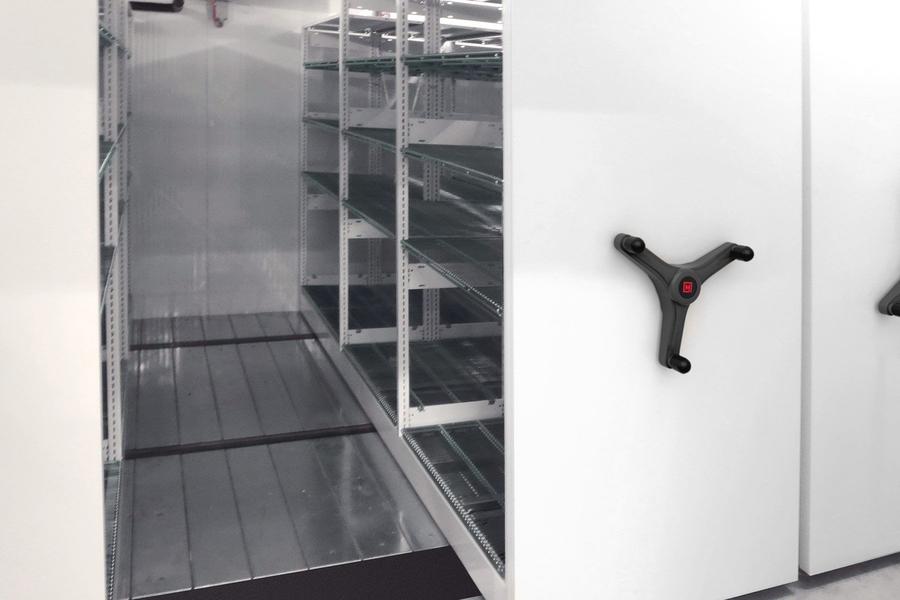
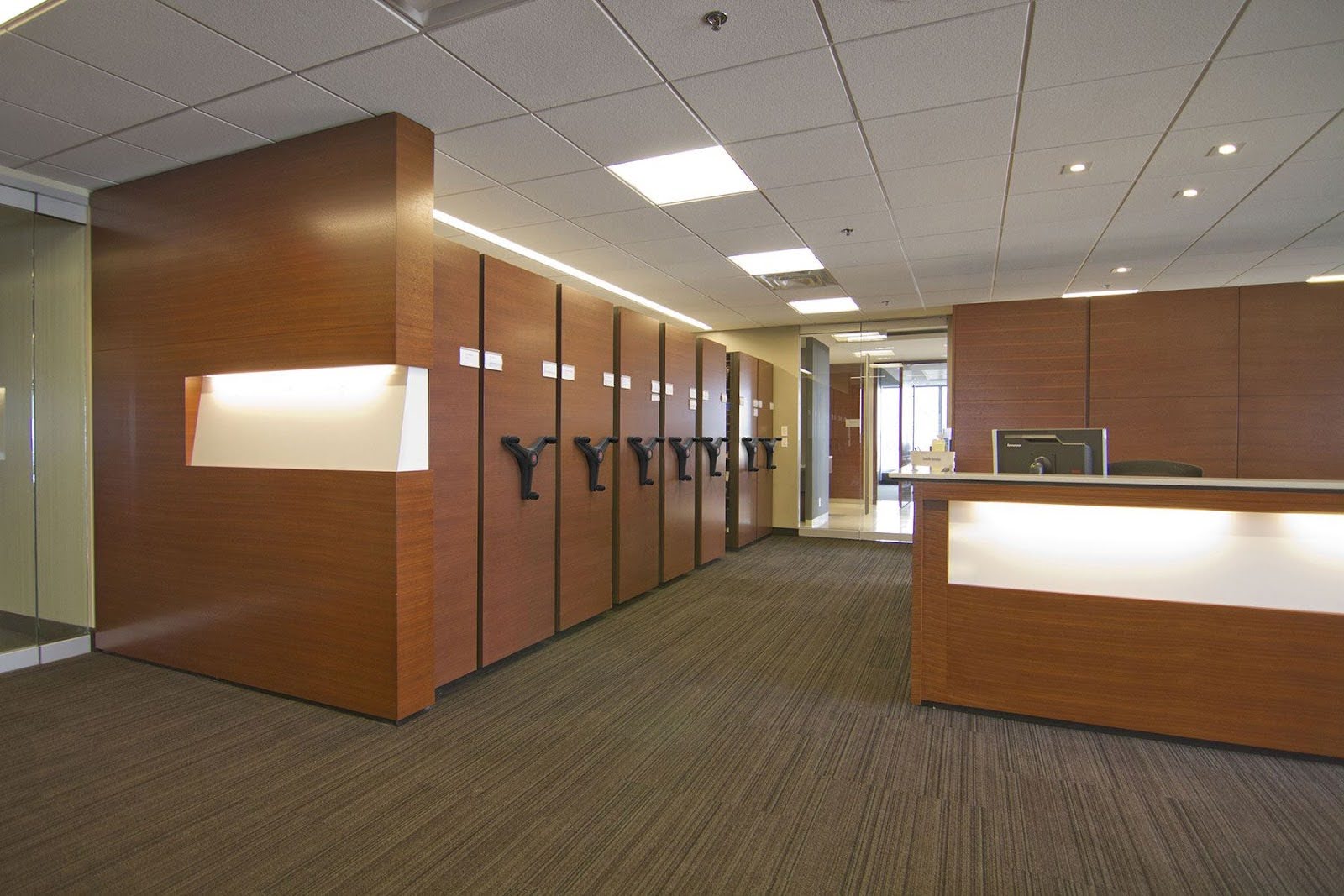
High-density mobile storage reduces the need for multiple fixed aisles, increasing storage capacity within an existing footprint. But when storage moves, safety must be built into the system from the beginning.
That’s why Montel combines structural engineering, controlled movement, and integrated safety features to create safer, more efficient storage environments across industrial, healthcare, institutional, and commercial applications.
The Hidden Risks of Traditional Storage Environments
Storage-related hazards aren’t always obvious. As facilities evolve, inefficient layouts, aging infrastructure, and changing inventory demands can introduce operational risks over time:
- Congested Aisles: Excess inventory and floor-level obstructions can increase trip hazards and make it more difficult for people and equipment to move safely.
- Structural & Load Considerations: Storage systems must be properly engineered, anchored, and maintained for the loads they support.
- Inefficient Material Movement: Poorly planned layouts can require unnecessary reaching, carrying, and movement of materials, increasing physical demands on employees.
Addressing these risks requires more than simply adding storage capacity. It requires a system engineered around how people, materials, and equipment move through the space.
Montel’s Built-In Safety Architecture
Montel systems are engineered with mechanical, structural, and electronic safety features designed to support controlled operation and help protect users and stored materials.
1. SafeAisle® Aisle Protection
SafeAisle® offers multiple levels of aisle protection based on the application:
- Aisle LED Guard™: Montel’s advanced passive safety technology monitors the entire floor surface of the open aisle. If a user or object is detected, carriage movement is prevented until the aisle is clear.
- Aisle-Entry People Counter: Monitors users entering and exiting the aisle for an additional layer of protection.
- Infrared Safety Beams: Available in one- or two-sided configurations to detect floor-level obstructions and stop system movement.
These safety options help prevent unsafe carriage movement while reducing reliance on user intervention.
2. Controlled Movement
Smooth, predictable movement is an important part of mobile storage safety.
SafeAisle® uses controlled acceleration and deceleration, programmable operating speeds, and dynamic braking to help protect users and stored materials during powered carriage movement. Its direct-drive system also provides positive guidance and consistent movement along the tracks.
For mechanical-assist applications, Mobilex® provides an alternative approach to controlled movement, allowing users to move heavily loaded carriages with minimal physical effort.
3. Structural & Seismic Engineering
Safety extends beyond everyday operation to the structural design of the system itself.
Montel mobile systems can incorporate engineered rail assemblies and anti-tip track options designed to provide structural stability and proper load distribution. Systems can also be configured to meet applicable seismic and local building-code requirements.
Even at floor level, narrow track guidance channels are designed to reduce tripping hazards, help prevent debris accumulation, and facilitate cleaning.
4. Fail-Safe & Automatic Protection
SafeAisle® prevents another aisle from being selected while an open aisle is occupied and incorporates fail-safe protection to prevent carriage movement if the safety system detects a failure.
Once the system confirms that users and objects have cleared the aisle, it can automatically reset—helping maintain efficient workflows without compromising aisle protection.
Safety and Productivity Can Work Together
A safer storage environment doesn’t have to come at the expense of productivity. By reducing the number of fixed aisles, high-density mobile storage can increase usable storage capacity within the same footprint while improving organization and access to stored materials.
From track design and controlled carriage movement to aisle detection and automatic protection, safety is considered throughout the system.
When safety and space optimization are engineered together, facilities don’t have to choose between capacity and control.
Discover Safer High-Density Storage
Every facility presents different operational, structural, and safety requirements. Montel high-density mobile systems can be configured around your space, inventory, traffic levels, and application.
Ready to make better use of your space without compromising safety?
Contact your local Authorized Montel Distributor to explore a high-density storage solution engineered around your facility.
Operational Safety Q&A
How does Aisle LED Guard™ protect users?
The system monitors the floor surface of the open aisle and prevents carriage movement when a user or object is detected.
What happens if an aisle is occupied?
SafeAisle® prevents another aisle from being selected until the open aisle is clear. Fail-safe technology also prevents carriage movement if the safety system detects a failure.
Can Montel mobile systems accommodate seismic requirements?
Yes. Anti-tip track options are available, and systems can be engineered according to applicable seismic and local building-code requirements.