The Cost of "Dead Air" in the Modern Dealership
Insights on storage - April 22nd 2026
Key Takeaways: Why Storage Density Matters in Modern Dealerships
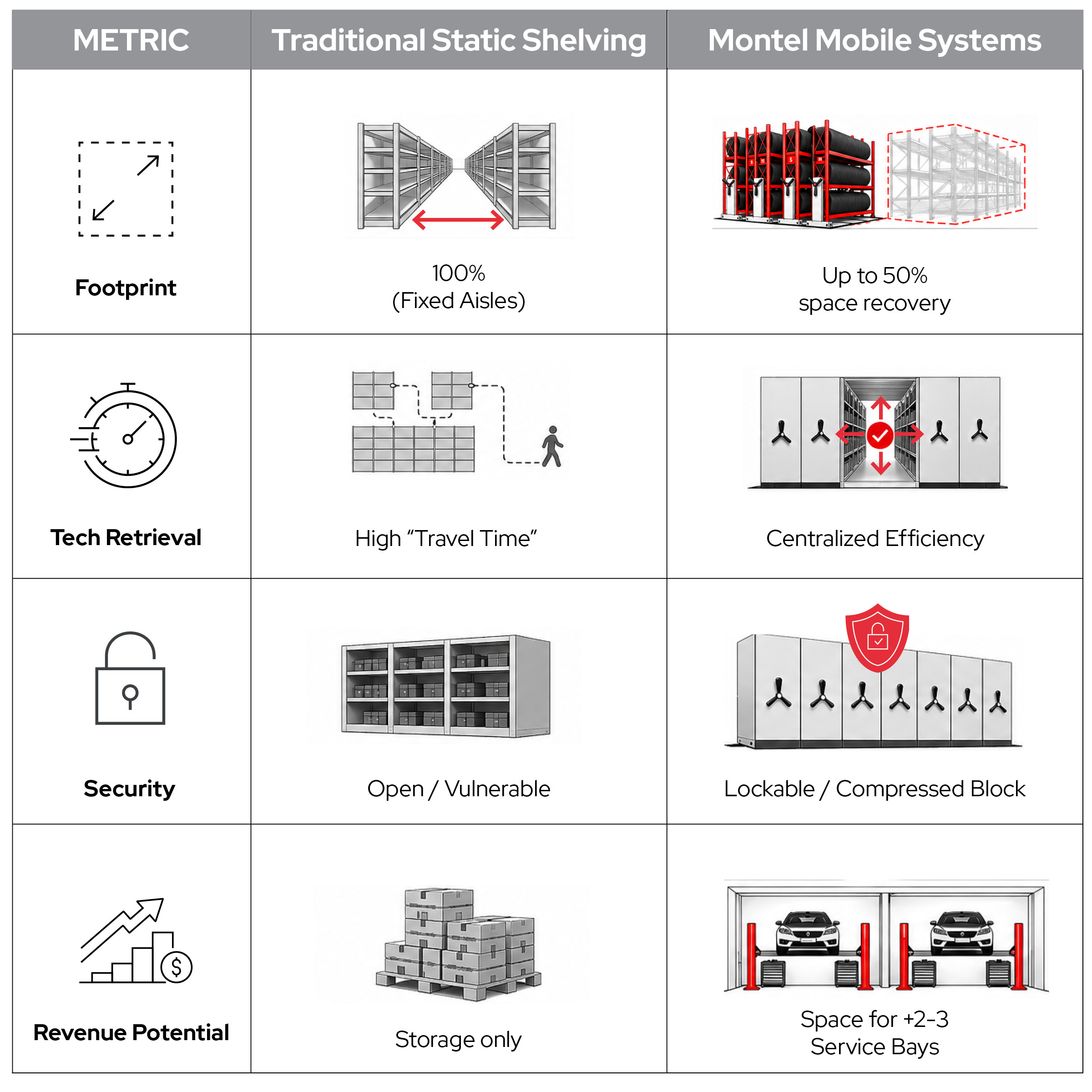
- Footprint Recovery: Reclaim up to 50% of floor space, often enabling additional service capacity.
- Technician Efficiency: Reduce "travel time" and support more consistent "wrench time".
- Inventory Integrity: Better protect high-value SKUs and heavy EV components within more controlled layouts.
- Scalability: Adapt more easily to seasonal tire surges and evolving EV storage requirements.
The challenge is universal: How do you organize thousands of unique SKUs, from microscopic washers to bulky engine blocks, without expensive physical expansion? The most effective way to address this is by reducing “dead air.” By moving away from static, space-wasting shelves toward high-density mobile storage, dealerships are increasingly turning parts departments into strategic operational assets.
Managing Parts Complexity: From Small Components to Heavy Assemblies
An auto parts department is a study in diversity. Traditional shelving often falls short because it applies a "one size fits all" approach, leaving significant gaps of wasted vertical space.
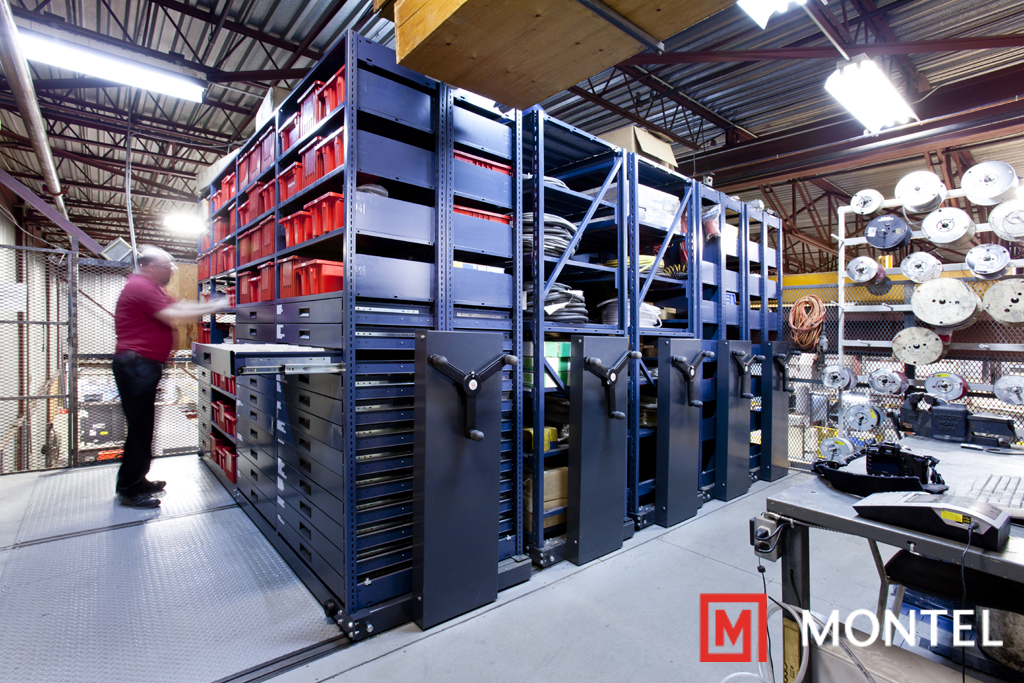
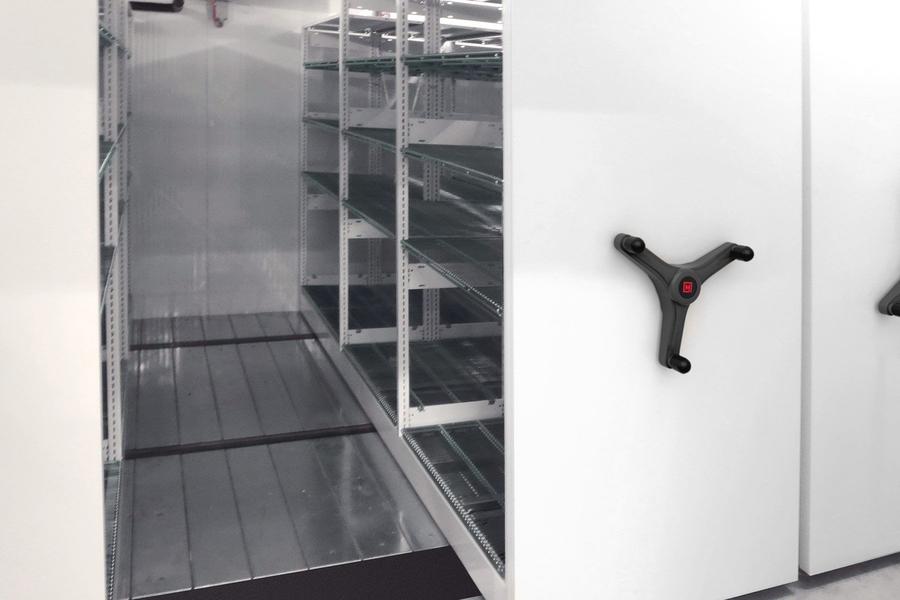
Montel’s high-density mobile storage systems utilize adjustable, heavy-duty carriages that eliminate permanent aisles. By consolidating inventory into a footprint that is 50% smaller than traditional layouts, facilities can maintain a more robust on-site inventory. This directly reduces "out of stock" delays, helping prevent service delays caused by missing parts.
Maximizing "Wrench Time" and Technician Efficiency
Every minute a technician spends navigating a labyrinth of static shelves is a minute they aren't billing hours. In competitive markets across North America and Europe, increasing "wrench time" is one of the most direct drivers of profitability.
A centralized, mechanically-assisted mobile system reduces the distance between parts and service. When the search-and-retrieve cycle is cut in half, vehicle turnaround accelerates. More importantly, in a market where top-tier talent is scarce, providing a frictionless, organized environment becomes a powerful tool for staff retention.
Tire Storage Solutions: Optimizing Space with Vertical Racking
Tires are one of the most significant space constraints in a dealership. In regions with harsh winters—from the Northeast USA to Scandinavia—seasonal tire storage is a massive logistical burden.
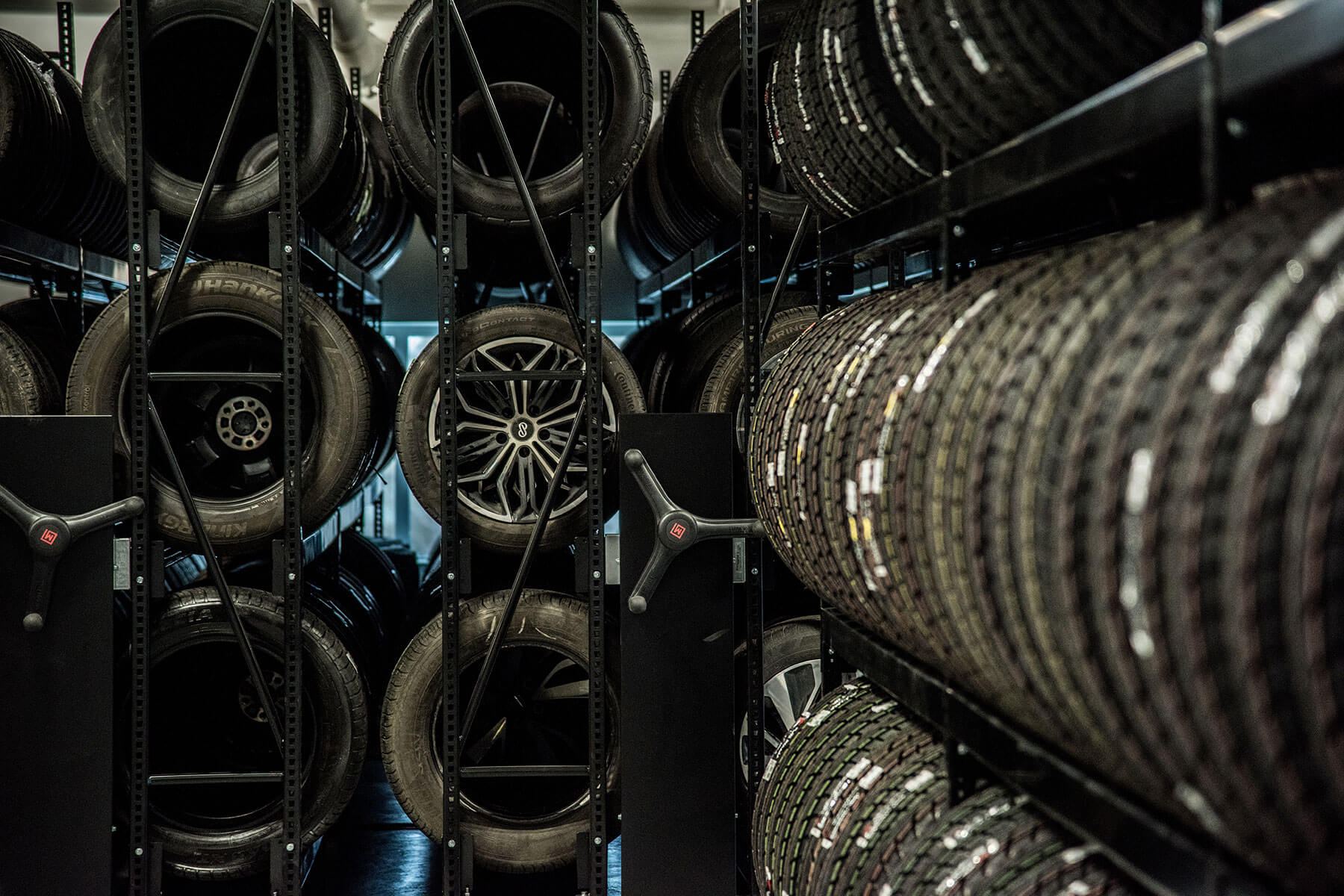
Integrating vertical tire racking into a mobile system allows full utilization of the facility’s clear height. Beyond improving organization, it can also support new revenue streams through professional tire hoteling services. You aren’t just stacking tires; you are reclaiming the square footage needed to add two or three additional service bays.
EV Parts Storage and Security Considerations
Beyond space, mobile systems offer a "closed-stack" security advantage. High-value components can be compressed into a solid, lockable block at the end of the shift.
Looking forward, the transition to Electric Vehicles (EVs) introduces heavier, oversized components that require specific safety spacing and weight capacities. Static shelving is not designed to support these evolving requirements. A mobile, heavy-duty approach ensures your facility is ready for the weight of the next decade.
High-Density Storage as a Form of Virtual Expansion
Mobile storage acts as a "virtual expansion," allowing you to grow your service capacity without a single brick of new construction. It’s about being lean, staying organized, and prioritizing the speed of service.
Q&A: Optimizing Your Parts Room
Q: Can mobile shelves handle the weight of heavy engine parts? A: Yes. Montel’s mobile carriages are engineered for high-capacity loads, capable of moving thousands of pounds with minimal effort, making them ideal for heavy high-density parts inventory.
Q: How much space can I actually save with mobile auto dealership shelving? A: Most dealerships can reduce their storage footprint by up to 50% compared to traditional static shelving, or double their storage capacity within the same area.
Q: Is vertical tire racking difficult to load and unload? A: Not with the right design. Our systems are built to work with standard material handling equipment, ensuring that tires can be moved safely and quickly by staff.
Q: Are these systems customizable for different dealership sizes? A: Yes. Whether you are a small boutique shop or a massive regional distribution center, mobile systems are modular and can be scaled to fit your specific dimensions and SKU counts.