The True ROI of High-Density Mobile Storage: Looking Beyond Purchase Price
Insights on storage - June 28th 2026
Key Takeaways
- Look Beyond Sticker Price: True ROI is determined by Total Cost of Ownership (TCO), balancing initial capital expenditure with long-term operational efficiency.
- Maximize Vertical & Horizontal Footprints: Premium mobile storage solutions allow operations to scale up, not out, avoiding costly real estate expansion.
- Minimize Operational Downtime: Industrial shelving must be highly adjustable, durable against harsh environments, and designed to optimize daily labor workflows.
Not all mobile storage systems are engineered for long-term performance. Some can result in rigid configurations, increased maintenance demands, and reduced operational flexibility.
True ROI should be measured by operational efficiency, productivity, and capacity expansion. Investing in premium engineering upfront ensures your facility performs at its peak, accelerating your return through long-term spatial and labor efficiencies.
1. Maximizing Spatial Efficiency and Facility Footprint Optimization
By eliminating static aisles, mobile storage naturally compresses your footprint. In many applications, high-density mobile storage can reduce the storage footprint by up to 50% compared to traditional static layouts. However, standard systems often treat this space-saving benefit as the ceiling.
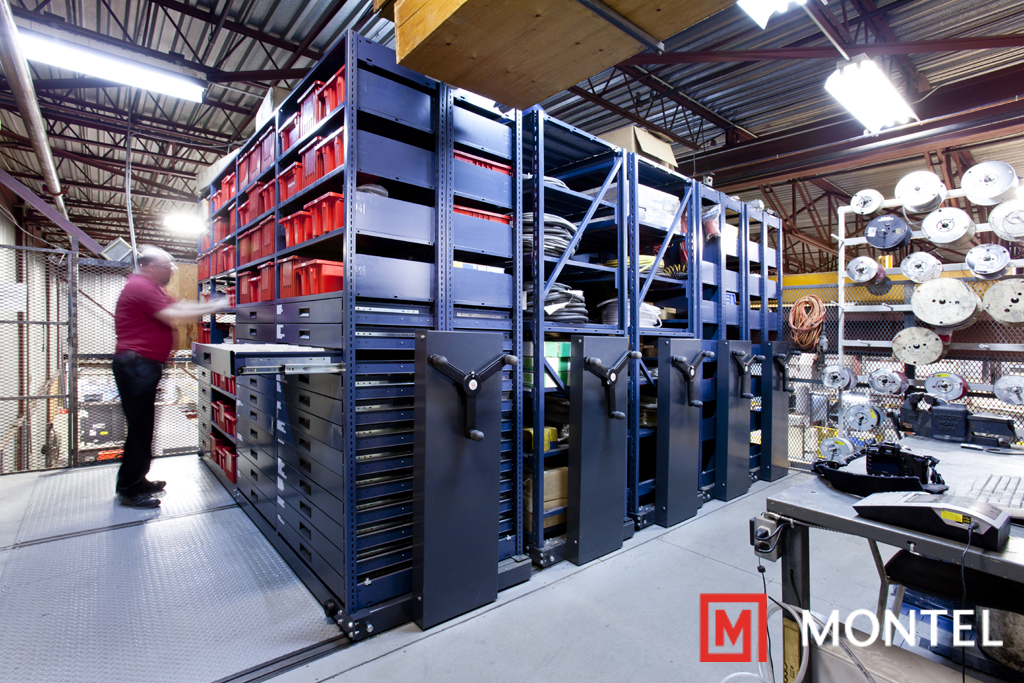
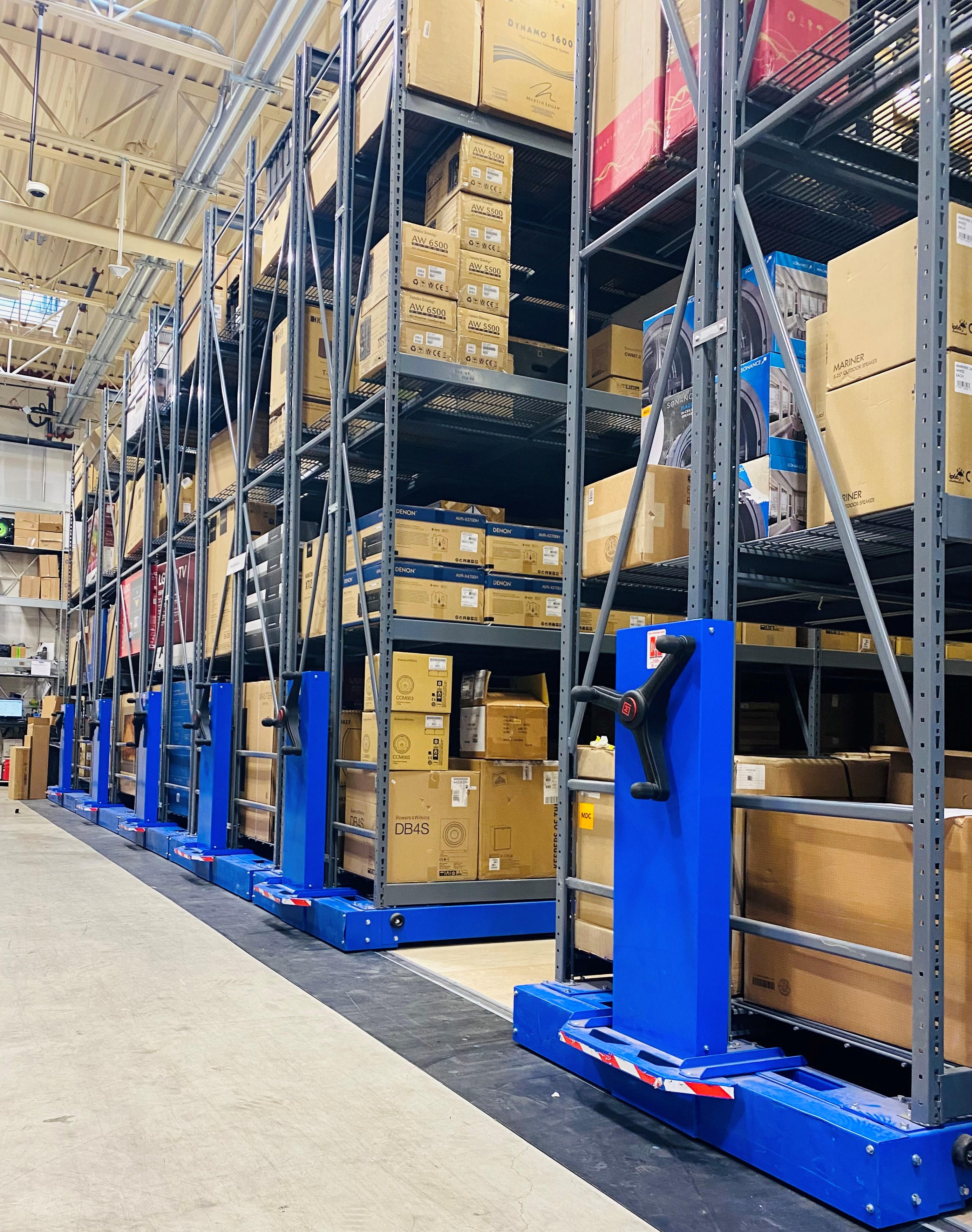
For operators looking to scale, true spatial efficiency requires maximizing both horizontal and vertical axes without sacrificing safety or accessibility. High-quality mobile carriages handle heavier structural loads and taller configurations, allowing you to scale your existing footprint upward rather than investing in expensive brick-and-mortar expansion.
2. Reducing Total Cost of Ownership (TCO) Through Durability
A smart facility manager factors lifecycle maintenance into their ROI calculations. Lower-quality systems often wear down under heavy industrial use, while a premium solution acts as a hedge against operational downtime. When auditing a system's long-term viability, ask:
- Environmental Resilience: Will the framing, carriages, and mechanical components withstand power washing, industrial cleaners, or specialized environmental factors?
- Toolless Adaptability: Can your on-site staff adjust shelf heights quickly to accommodate changing SKU profiles, or does it require a third-party technician and costly operational delays?
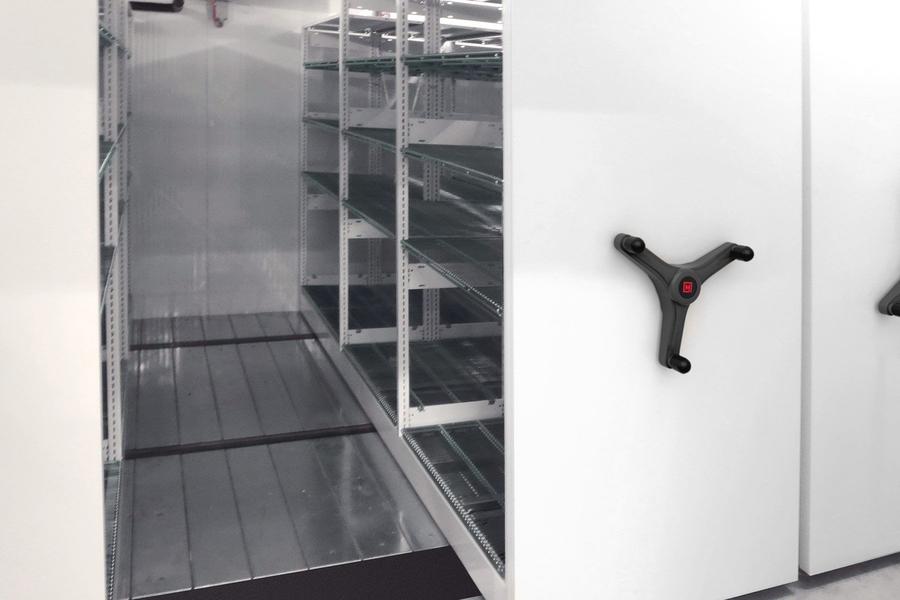
- Hygienic Design: Does the construction actively support your facility’s sanitation standards, or does it create hard-to-clean pockets that harbor dust and pests?
3. Optimizing Labor Workflows and Ergonomics
Labor remains one of the largest operational expenses for any enterprise. If your storage hardware doesn't support the workforce on the floor, localized spatial savings are quickly lost to inefficient picking workflows.
High-density mobile systems must support workers through intuitive layout organization, smooth mechanical or electrical operation, and redundant safety features.
The Montel Standard
As the pioneers of mobile storage nearly a century ago, Montel continues to engineer solutions designed for organizations that prioritize long-term performance, safety, and operational efficiency. We recognize that our solutions represent a significant capital commitment. However, Montel systems are built for operators who value precision engineering, reliability, and a demonstrably lower Total Cost of Ownership.
Ready to optimize your facility’s operational reality? Contact your local Authorized Montel Distributor to schedule a complimentary consultation, including custom 2D and 3D space-utilization renderings tailored to your exact specifications.
Operational Q&A
Q: How do I know if a mobile storage system is engineered for industrial environments?
A: Evaluate the system's load capacity, corrosion resistance, adaptability, and long-term maintenance requirements. A properly engineered mobile storage solution should withstand demanding industrial conditions while remaining easy to reconfigure as operational needs evolve.
Q: How does mobile storage impact facility safety? A: Advanced systems feature integrated safety floors, motion sensors, and anti-tip mechanisms to protect both personnel and inventory during active aisle utilization.
Q: Is it difficult to reconfigure mobile shelving as inventory needs change? A: High-quality systems feature modular, highly adjustable designs that allow warehouse staff to quickly alter shelf intervals on-site, minimizing downtime as operational demands scale.