The Evolution of Vertical Farming: From Ancient Ingenuity to Operational Reality
Insights on vertical farming - June 11th 2026
Key Takeaways
- Rooted in Efficiency: Vertical and soilless farming concepts evolved out of geographical necessity to bypass traditional land constraints.
- The Modern Shift: Dr. Dickson Despommier popularized the modern skyscraper farm concept in 1999, proving that controlled environment agriculture (CEA) could drastically cut logistical costs.
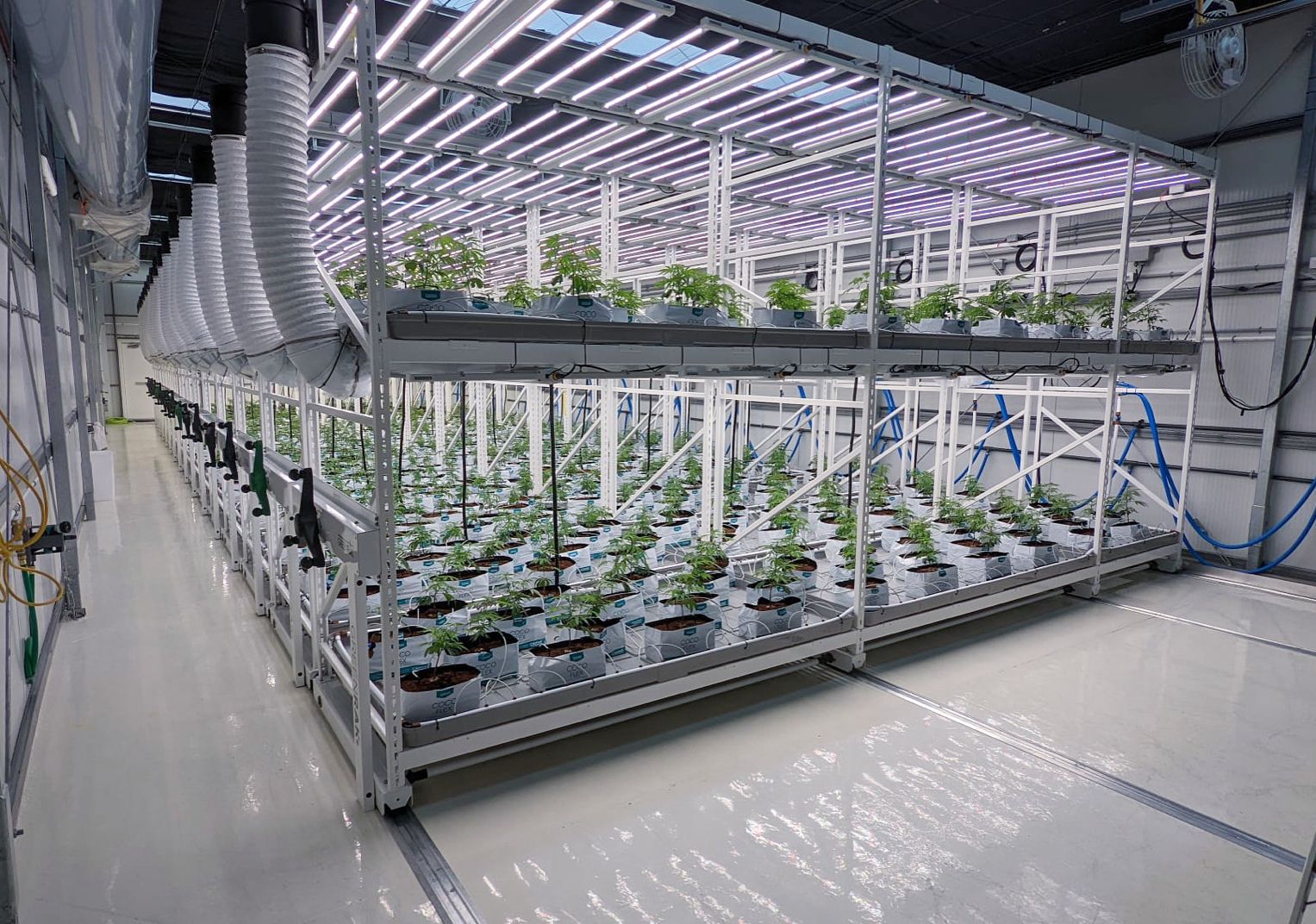
- Operational Reality: Today, companies like Montel translate these historical concepts into high-density mobile racking systems that can increase canopy capacity by up to 100% without expanding a facility's footprint.
Precursors to Vertical Efficiency: The Power of Innovation
Long before automation and LED lights revolutionized commercial cultivation facilities, farmers were already developing the core principles of hydroponics to bypass environmental limitations.
In the 12th century, Aztec agriculturalists developed chinampas—floating, highly fertile artificial islands built on freshwater marshes. Because land was scarce, they engineered a sub-irrigation system that optimized localized resources.
Similarly, modern vertical farming seeks to overcome environmental limitations through controlled growing environments. By stacking cultivation layers vertically, today's operators pursue the same objective as the Aztecs centuries ago: maximizing productivity by adapting cultivation methods to local environments while delivering predictable, year-round harvests regardless of external weather patterns.
From Science Fiction to Scalable Infrastructure
Fast-forward several centuries, and a different challenge emerged. Rapid urbanization created a growing tension between cities and farms. Early premonitions of vertical integration appeared in a 1909 issue of Life magazine, featuring a cartoon of a "cozy cottage" skyscraper that offered "all the comforts of the country with none of its disadvantages."
A few imaginative leaps later, what began as a utopian concept started moving toward operational reality. Dr. Dickson Despommier, a professor at Columbia University, alongside his students, designed a commercial vertical farm skyscraper capable of feeding thousands. Despommier’s work established the core pillars of modern controlled environment agriculture (CEA):
- Reliable Production: Delivering consistent, year-round harvests regardless of seasonal or climatic conditions.
- Predictable Sustainability: Eliminating supply chain vulnerabilities by growing hyper-locally.
- Unmatched Space Efficiency: Maximizing productive canopy within a facility's available cubic volume, a crucial metric for high-yield commercial facilities.
Translating History into High-Density Commercial Success
At Montel, we view the history of vertical farming not as a finished story, but as an ongoing evolution. The challenges facing growers today—maximizing yield, reducing resource consumption, and producing more within a limited footprint—are the same challenges innovators have been solving for centuries.
Looking ahead, the future of vertical farming will likely include greater automation, AI-driven environmental controls, robotics, and cultivation systems capable of supporting food production in some of the world's most challenging environments. Whether that means repurposed urban warehouses, remote northern communities, or even horticulture beyond Earth, the goal remains unchanged: grow more with less.
Our role at Montel is to help provide the infrastructure that makes that future possible. Because if history has taught us anything, it's that growers will always find new ways to make better use of every square foot—and eventually, every cubic foot—available to them.
FAQ: Operational Reality & High-Density Systems
Q: Can mobile racking systems handle the weight and humidity requirements of a commercial vertical farm?
A: Absolutely. Commercial systems like Montel's GREENRAK™ and GROW&ROLL™ are specifically engineered with anti-corrosive finishes to withstand high-humidity CEA environments, with the structural capacity to safely support multi-tier irrigation, growing media, and lighting systems.
Q: How does transitioning to a mobile vertical farming system affect daily labor and workflow?
A: Mechanical or powered mobile benches eliminate wasted aisle space while maintaining easy accessibility. Operators can open an aisle with the touch of a button or turn of a handle, allowing staff to prune, harvest, and monitor plants safely without disrupting the rest of the canopy.
Q: Are vertical mobile systems suitable for scaling an existing warehouse operation?
A: Yes. Mobile racking is one of the most cost-effective ways to scale because it utilizes the vertical volume you are already paying to heat, cool, dehumidify, and lease. Instead of funding an expensive facility expansion, high-density systems can increase production capacity by up to 100% within your existing footprint.