From Kegs to Cases: How Mobile Storage Streamlines Brewery and Microbrewery Operations
Insights on storage - April 13th 2026
Key Takeaways
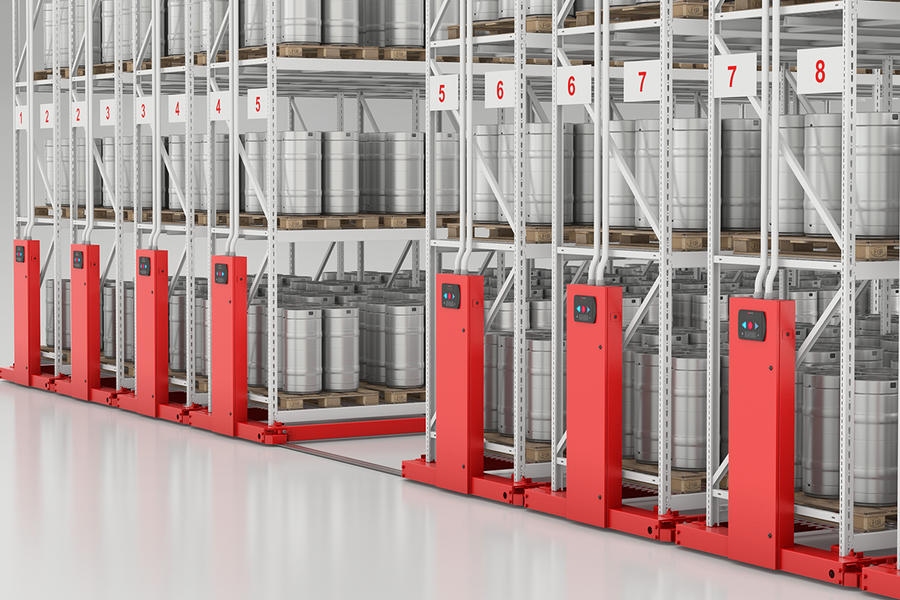
- Maximize Expensive Footprint: Cold storage is the most expensive real estate in a brewery; mobile racking doubles capacity without expanding the building footprint.
- Operational Speed: High-density systems eliminate "keg shuffling," enabling faster FIFO (First-In, First-Out) rotation and distribution.
- Sustainability & Savings: Reducing the total cubic feet of refrigerated space required leads to a direct reduction in energy overhead.
- Built for "Wet Work": Specialized finishes and lubricants ensure mechanical reliability in high-moisture, sub-zero environments.
The challenge is that beer doesn't like to wait in the heat. To maintain quality, a significant portion of your inventory must live in a refrigerated environment. However, every cubic inch of a walk-in cooler that isn’t filled with product is essentially "cooling air" at a high cost. This is where modern brewery storage solutions move from a luxury to a logistical necessity.
Conquering the High Cost of Refrigerated Space
For breweries in North America and Europe, the power bill is often the second-largest overhead expense after labor and raw materials. In a standard cooler setup, nearly half the room is dedicated to static aisles. You are paying to refrigerate empty air—one of the most expensive inefficiencies in your operation.
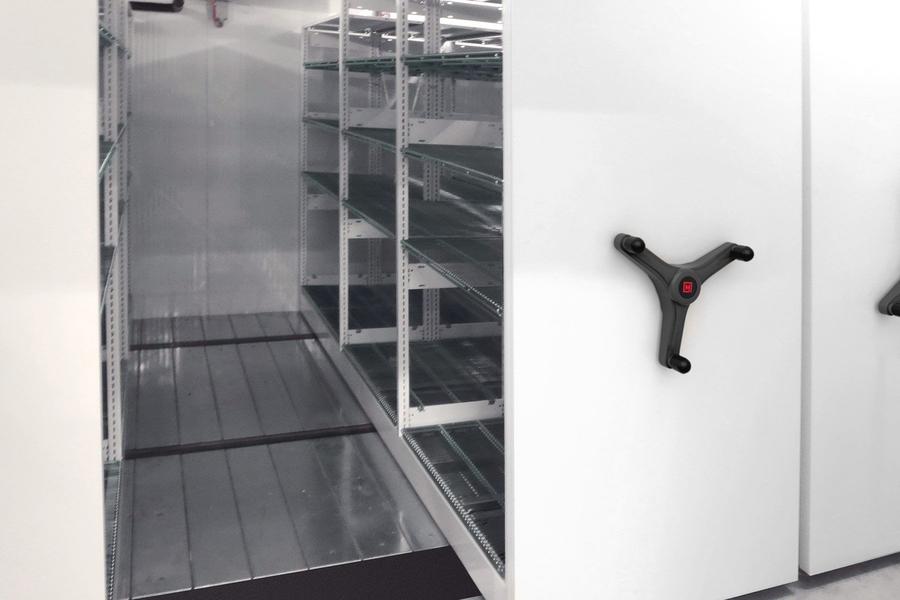
By implementing cold storage mobile racking, you eliminate these fixed aisles. Instead of several permanent paths, a mobile system utilizes a single, movable aisle that opens only when needed. One aisle. Maximum storage. Zero wasted space. This allows you to either condense your storage footprint—or double your capacity within the same cooler. The result is a dramatic increase in beverage distribution center efficiency without the need for costly structural expansions or refrigeration upgrades.
Versatility: Beyond the Finished Keg
A brewery isn’t just storage—it’s a flow of materials, timing, and temperature control. It’s a complex ecosystem of raw hops, yeast cultures, aging barrels, and packaging materials. A "one-size-fits-all" shelf cannot handle the diverse loads of a scaling operation.
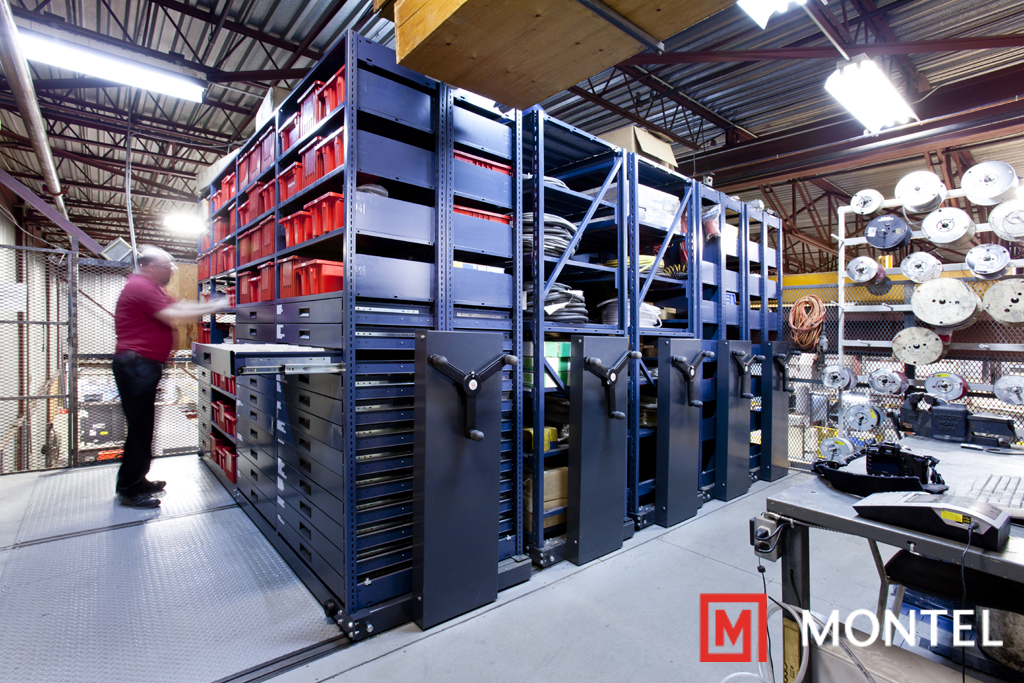
Montel’s heavy-duty mobile carriages are engineered to handle the staggering weight of full half-barrel kegs while remaining agile enough for small-batch bottled cases. By utilizing customizable shelving layouts, you can organize your cold room by SKU, expiration date, or "first-in, first-out" (FIFO) protocols. This level of organization is vital for maintaining the flavor profiles and freshness your customers expect.
Slashing Picking Times and Labor Costs
As a microbrewery grows, it often transitions from taproom sales to wider distribution. This shift requires a disciplined approach to logistics. In highly competitive markets, the speed of fulfillment determines your shelf presence.
When storage is organized on a mobile system, picking times are slashed. No more moving five full kegs just to reach one at the back. Our high-density beverage solutions allow for clear labeling and rapid access, ensuring delivery trucks are loaded faster and beer reaches the consumer fresher. Furthermore, open aisles on demand improve ergonomic safety for staff handling heavy loads.
Durability in "Wet Work" Environments
Breweries are wet, cold, and demanding. Standard industrial racking often falls victim to corrosion or mechanical failure when subjected to constant moisture.
Montel’s systems are built specifically for these conditions, featuring corrosion-resistant finishes and specialized lubricants that remain fluid in sub-zero temperatures. Whether you are a start-up in Ontario or a high-volume facility in the Middle East, the structural integrity of your racking is non-negotiable.
Scalability: Growing Your Barrel Count
The dream of every head brewer is to need more space, it means the beer is selling. But physical expansion is a nightmare of permits and construction. Mobile storage transforms your existing space into a high-performance system—delivering a “virtual expansion” without construction.
By densifying storage, you free up floor space for more fermentation vessels or a larger canning line. It allows you to stay in your current facility longer, maximizing your ROI. It’s about working smarter, not just bigger.
Optimizing your cold storage protects the quality of your brew while lowering overhead. Transitioning to mobile racking ensures your storage is as refined as your grain bill.
Is your cooler already at capacity—or just poorly optimized?
Don't let a lack of space cap your production. Contact Montel today for a custom storage audit and see how we can help you pour more profit into every pint.
Q&A: Brewery Storage Efficiency
Q: Can mobile racking handle the weight of stacked kegs? A: Yes. Montel systems are designed for heavy industrial use, with carriages capable of supporting several tons of weight, which is essential for dense beer keg storage.
Q: Do these systems work in deep-freeze environments? A: Absolutely. Our cold storage mobile racking is frequently used in industrial freezers and coolers across North America, utilizing components specifically rated for low-temperature performance.
Q: How does this improve beverage distribution center efficiency? A: By consolidating inventory, you reduce the travel time for pickers and ensure that all SKUs are easily accessible, leading to faster loading times and better inventory tracking.
Q: Is it difficult to clean around mobile racks? A: Not at all. The systems can be moved to expose the floor for deep cleaning, helping you maintain the strict hygiene standards required in food and beverage production.